
The Comfort Promise at UCSF Benioff Children's Hospitals
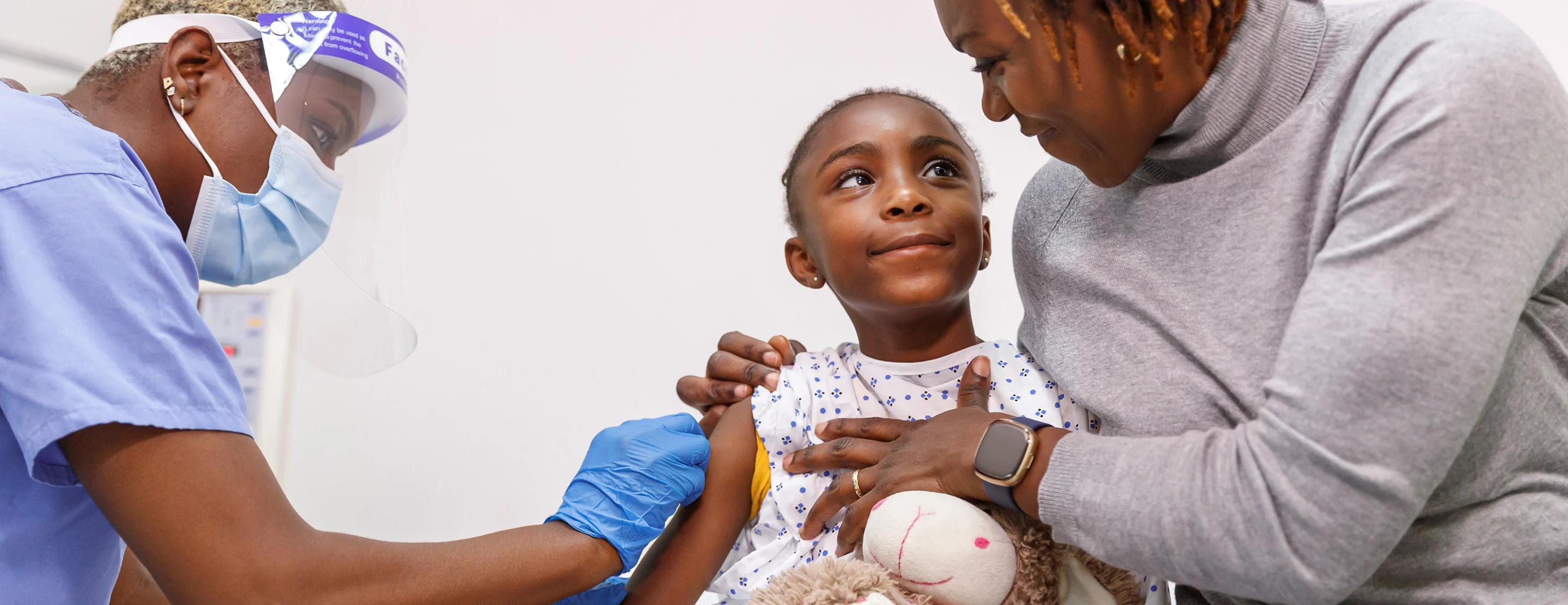
We promise to do everything possible to prevent and treat needle pain. For every child. Every time.
Kids don't like needles, and no one wants to see their child in pain. That's why we promise to do everything possible to minimize the pain of needle procedures for children of every age, from babies to teens.
Whether your child needs a vaccine, a blood draw or an IV catheter placement, our experienced and compassionate providers partner with you to use simple pain-reduction tools and techniques that work for your family.
Please note: The Comfort Promise Program is rolling out over time and is not yet available at all of our pediatric hospitals and clinics. To find out whether it's in effect in your child's unit, clinic or lab, check with the medical team there.
Our comfort tool kit
Numbing cream
Makes needle procedures less painfulComfort positions
Helps children feel calm and secureDistractions
Puts the focus on an entertaining activityChoices
Provides the patient with some sense of controlBreastfeeding or sugar water
Soothes and reduces babies' painMemory-shaping
Frames the experience in a positive way
Comfort tools, by developmental age

The Comfort Promise Challenge
When your child needs extra support
If the comfort tools and techniques we offer don't make needles manageable for your child, talk with us about other options to explore what might work. Some of these include:
UCSF child life specialists
These health care professionals are trained to help kids feel ready for whatever their medical care entails, including IV catheter placements and other needle procedures. They use age-based teaching tools, such as dolls, pictures and medical equipment; techniques to reduce anxiety and promote relaxation, such as imagery and distraction; and therapeutic play before, during or after a procedure. Learn more about Child Life Services at UCSF.
Behavioral health treatments
For kids who are especially fearful of needles (including young children) and require ongoing needle procedures, consulting with a psychologist or a therapist can be helpful. There are effective techniques that can build kids' confidence about coping with needles.
Mild sedation with nitrous gas
Small doses of nitrous oxide (sometimes called "laughing gas") can calm children who are afraid of needles and reduce their pain. It doesn't affect their breathing, and they can respond to verbal commands. Nitrous oxide isn't yet available everywhere at UCSF, but we're working on providing it for kids throughout our system.
Moderate-deep sedation
Our team may recommend this kind of sedation for some kids, especially those who are hospitalized or in the emergency room.
Additional tips
If you're looking for even more ways to help your child cope with the pain and anxiety of a needle procedure, consider these supportive practices:
- Help your child understand what to expect. Explain that the procedure is needed to help their body be healthy. Don't claim that it won't hurt. Instead, try saying, "You may feel a pinch or pressure, and you can use [child's preferred distraction] to make it easier."
- Fill out a coping card (more languages below). Have your child indicate how they'd like things to go during their needle procedure.
- Give your child a job to do. For example, let them know that their job is to keep their arm still or to squeeze your hand.
- Have them try deep breathing. Encourage your child to take calming breaths before the procedure, and use big exhales to "blow away the pain" while it's happening.