Toddler's Brain Tumor Symptoms Subside Thanks to New Use of Epilepsy Laser Procedure
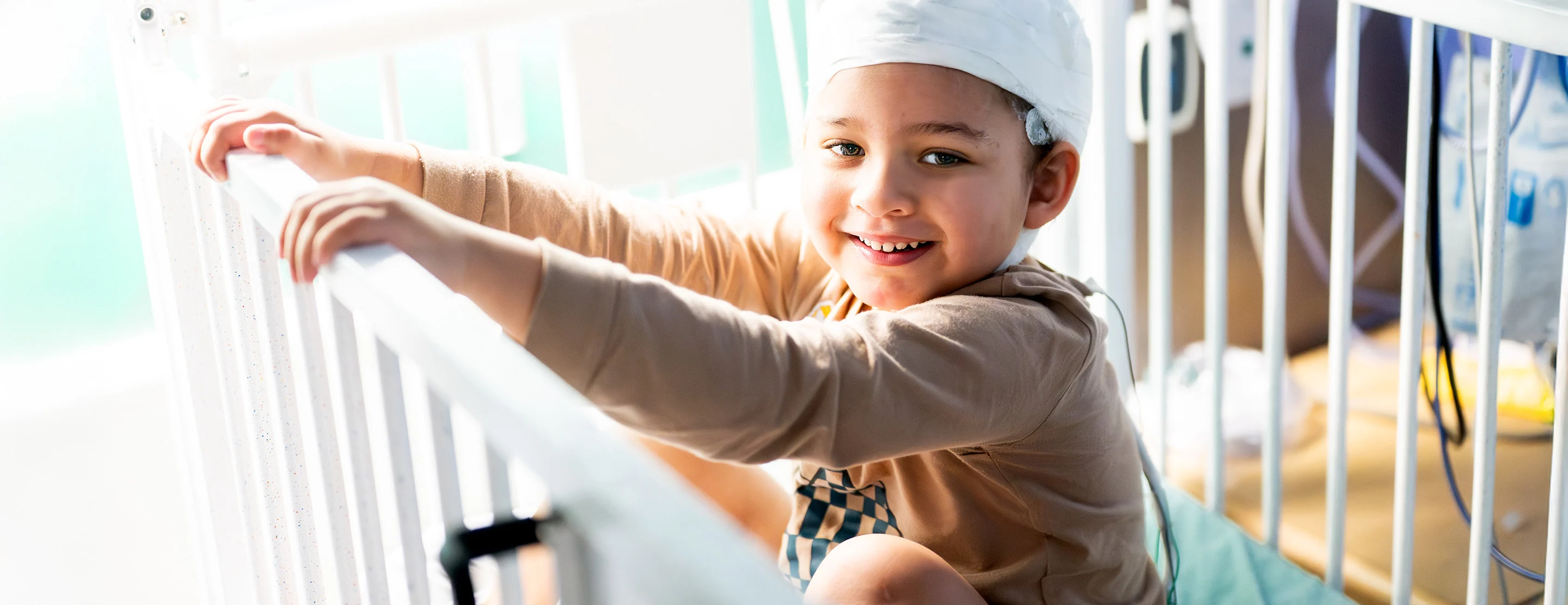
The day after 3-year-old Roger Andrews III had a procedure on his brain, he started talking again.
The Reno, Nevada, toddler began losing his speech at age 2. He'd also developed troubling motor symptoms: arm twitches, eye rolls, jerky movements that affected his balance. After a local neurologist diagnosed Roger with epilepsy, he was put on a waiting list for an MRI.
"Meanwhile, the medications weren't working, his seizures were getting worse and his whole personality changed," said Roger's mother, Jackie Laxalt. "We were referred to UCSF, where they did scans and found a tumor in his brain."
Dr. Peter Sun, a pediatric neurosurgeon at UCSF Benioff Children's Hospitals who sees patients monthly in Reno, suggested treating Roger with laser interstitial thermal therapy, or LITT, a technique that has been used to treat epilepsy for some time.
It can turn a risky surgery into something fairly routine.
"It's less invasive than the standard surgical procedure, which involves removing a part of the skull," said Sun, surgical director of the Pediatric Brain Center. "Instead, a tiny incision is made to facilitate the use of a laser that burns the targeted tissue."
Laxalt called her son's results nothing short of miraculous.
"Roger was out of the OR around 6 p.m. The next morning, he was pointing and saying words," she said. "He's mimicking, he's back on his milestones, he's potty training again. His speech and occupational therapists are blown away."
A new application for LITT
Roger's procedure was done by pediatric neurosurgeon Dr. Winson Ho, a pioneer in using LITT to treat kids with tumors. LITT has historically been used in children with specific types of epilepsy, not tumors, noted Dr. Nalin Gupta, chief of the pediatric neurosurgery division at UCSF.
"Using LITT for tumors, the way Dr. Ho has been doing, is a more recent development," Gupta said. "The primary advantages are its minimally invasive nature, faster recovery time, and the potential to still proceed to craniotomy [surgically opening the skull] if you don't get the desired response."
LITT is especially useful for children with lower grade tumors (those that grow and spread relatively slowly) that are difficult or dangerous to treat with open surgery. This may be because they are deep in the brain or located near important areas that carry a significant possibility of complications, said Ho.
"It can turn a risky surgery into something fairly routine, where the kid wakes up feeling fine and goes home within a couple days, instead of having a surgery with a seven- to 10-day recovery and inpatient rehab," said Ho.
Because the research in this area of treatment is limited, Ho will be leading a multicenter clinical trial through the UCSF-led Pediatric Neuro-Oncology Consortium, or PNOC, to study the long-term outcomes for children who receive LITT to treat low-grade brain tumors that couldn't be successfully resolved with other therapies.
For Laxalt, the verdict on LITT is already in: "Roger hasn't had a seizure in months, and he's regaining all the skills he lost. His personality is back," she said. "This technique is a miracle."
Photos by Noah Berger
1 of 3
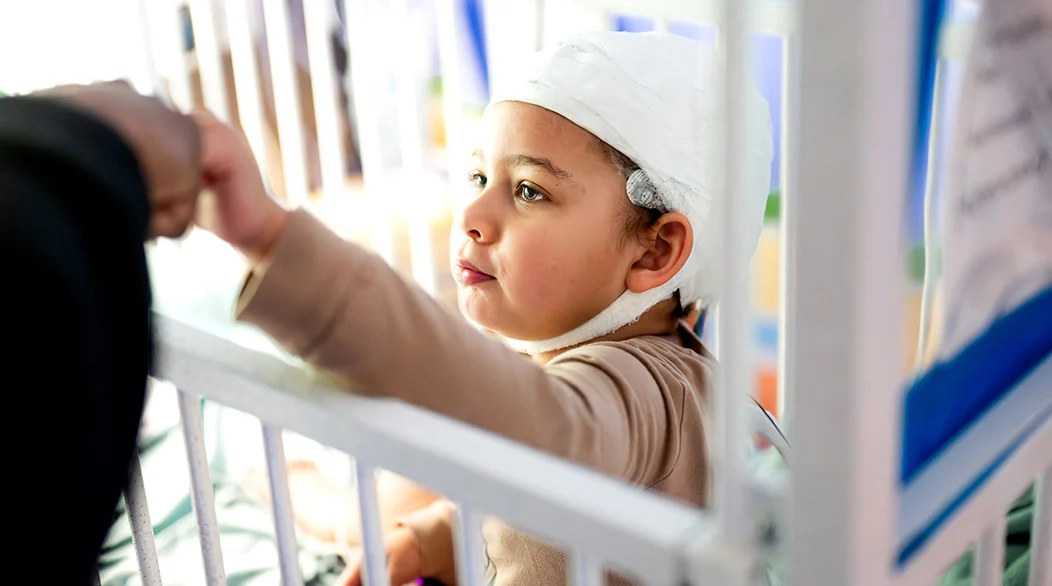
At age 2, Roger Andrews III started losing his speech skills and showing troubling symptoms related to movement.
Providers

Nalin Gupta, MD, PhD
Neurosurgery
Winson S. Ho, MD
Pediatric Neurosurgery
Peter P. Sun, MD
Neurosurgery • Pediatric Neurosurgery
Related services

Related conditions & treatments
Conditions
Treatments
- Brain Surgery
- Craniotomy
- Laser Interstitial Thermal Therapy