
Ependymoma in Children
On this page
Overview
Ependymoma is a rare type of brain cancer, mostly seen in children. The average age at diagnosis is 5 years. Approximately 200 to 300 cases are diagnosed annually in the United States. Nobody knows the cause of these tumors.
Ependymomas develop from cells lining the ventricles, located deep within the brain. These ventricles are normally filled with cerebrospinal fluid (CSF), and help cushion the brain from trauma.
Signs & symptoms
Ependymomas can arise in both the cerebral hemispheres — the large part of the brain — and in the cerebellum.
In the cerebral hemispheres, they can cause seizures, or loss of function leading to weakness or numbness in parts of the body. In the cerebellum, ependymomas often interfere with the flow of CSF within the brain, causing a build-up of CSF known as hydrocephalus. Hydrocephalus is often associated with headaches, or a rapidly increasing head circumference in infants, and is often the first symptom of ependymoma.
Diagnosis
As with other brain tumors, imaging studies such as a CT scan or MRI can define the size and spread of a tumor and may suggest the diagnosis of ependymoma. However, a surgical biopsy or removal is required to confirm the diagnosis.
Treatment
Ependymoma is a serious condition that needs to be treated by a team consisting of neurosurgeons, neuro-oncologists and radiation oncologists. Even with appropriate therapies, a fraction of patients cannot be cured.
As with most tumors, treatments are limited to three modalities: surgery, radiation and chemotherapy. Surgery is the most effective therapy for ependymomas, and is used whenever possible. Because of their deep location within the brain, however, it is often difficult to completely remove ependymomas without damaging vital brain structures.
Depending on the tumor's location, your child's neurosurgeon may remove as much of the tumor as possible by creating an opening in the skull in an operation called a craniotomy. If the ependymoma can't be removed due to its location, surgery may be limited to a biopsy or partial removal of the tumor.
The prognosis for children with ependymomas varies widely depending on the characteristics of the tumor and other factors, including location and percentage of tumor removed by surgery. The percentage of tumor removed by the surgeon is the most important factor in determining prognosis. Patients whose tumors can be completely removed have a much better prognosis than patients with incompletely removed ependymomas.
Although there is controversy regarding additional treatment for ependymoma, radiation therapy is often used when a tumor cannot be entirely removed. Chemotherapy is generally ineffective for ependymoma.
UCSF Benioff Children's Hospitals medical specialists have reviewed this information. It is for educational purposes only and is not intended to replace the advice of your child's doctor or other health care provider. We encourage you to discuss any questions or concerns you may have with your child's provider.
Awards & achievements


One of the nation's best for neurology & neurosurgery

Ranked among the nation's best in 11 specialties

Clinical trials
Target Validation and Efficacy of Metformin in Patients With Posterior Fossa Group A (PFA) EpendymomaOpens in a new window
This is a multi-site study of the pharmacodynamic effects and efficacy of metformin in children and young adults with recurrent or progressive Posterior Fossa Group A (PFA) ependymoma.Individualized Treatment Plan in Children and Young Adults With Relapsed Medulloblastoma and EpendymomaOpens in a new window
The current study will use a new treatment approach based on the molecular characteristics of each participant's tumor...ONC206 for Treatment of Newly Diagnosed, Recurrent Diffuse Midline Gliomas, and Other Recurrent Malignant CNS TumorsOpens in a new window
This phase I trial studies the effects and best dose of ONC206 alone or in combination with radiation therapy in treating patients with diffuse midline gliomas that is newly diagnosed or has come back (recurrent) or other recurrent primary malignant CNS tumors. ONC206 is a recently discovered compound that may stop cancer cells from growing...
Research initiatives
UCSF Pediatric Brain Tumor ResearchOpens in a new window
Our pediatric brain tumor research spans multiple research specialties, with a particular focus on understanding how the brain develops and finding new treatments for pediatric brain tumors.
Related conditions & treatments
Helpful resources
Support services
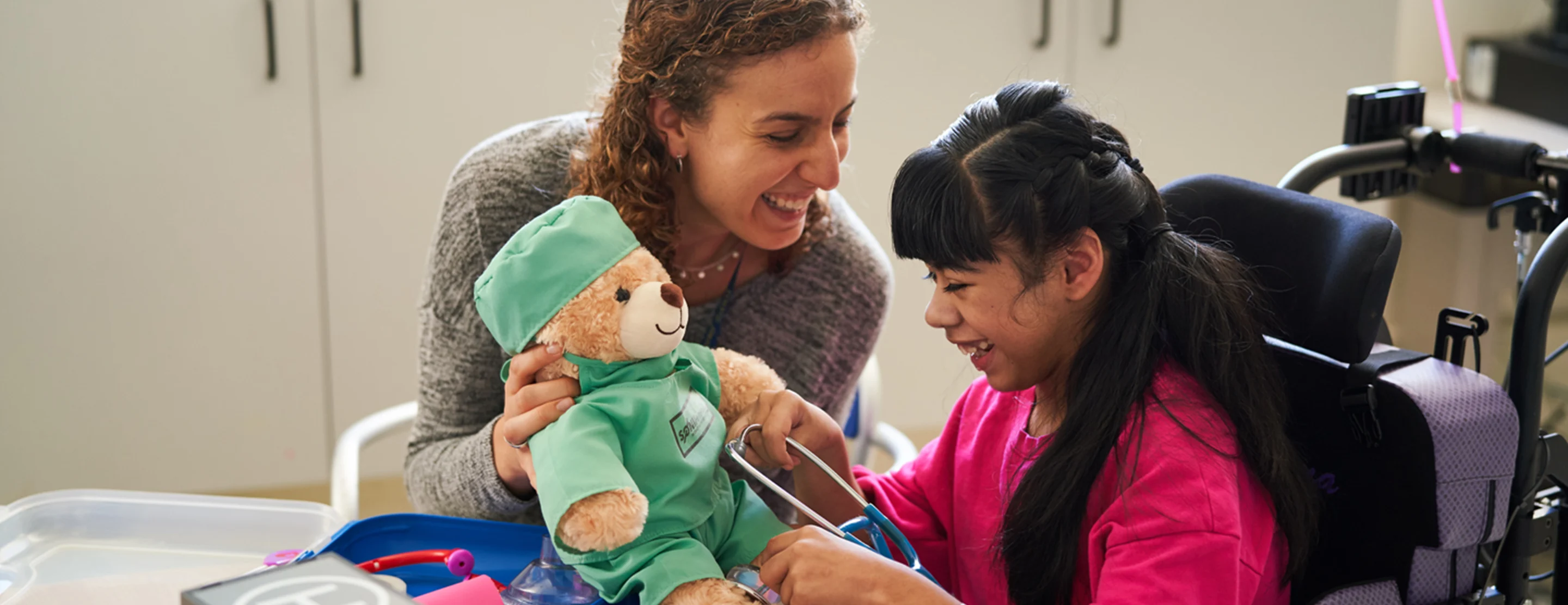
Child Life
Certified child life specialists ease the stress and anxiety of childhood illness through therapeutic play, schooling and family-focused support.
Glogau Teddy Bear Rescue Fund
Families that need additional assistance during their child's hospital stay have access to toys, hotel vouchers and other amenities. Find out more.
International Services at UCSF Benioff Children's Hospitals
If you're coming to UCSF from outside the U.S., we coordinate your child's appointments and provide other helpful services. Here's how to get started.
Interpreter Services & Communication Assistance at UCSF Benioff Children's Hospitals
Interpreter services in many languages and TDDs are available for families that need help communicating with care teams. Here's how to access them.
Patient Relations at UCSF Benioff Children's Hospitals
Patient relations reps and nursing supervisors are here to answer questions and address concerns. Learn about your rights, how to reach us and more.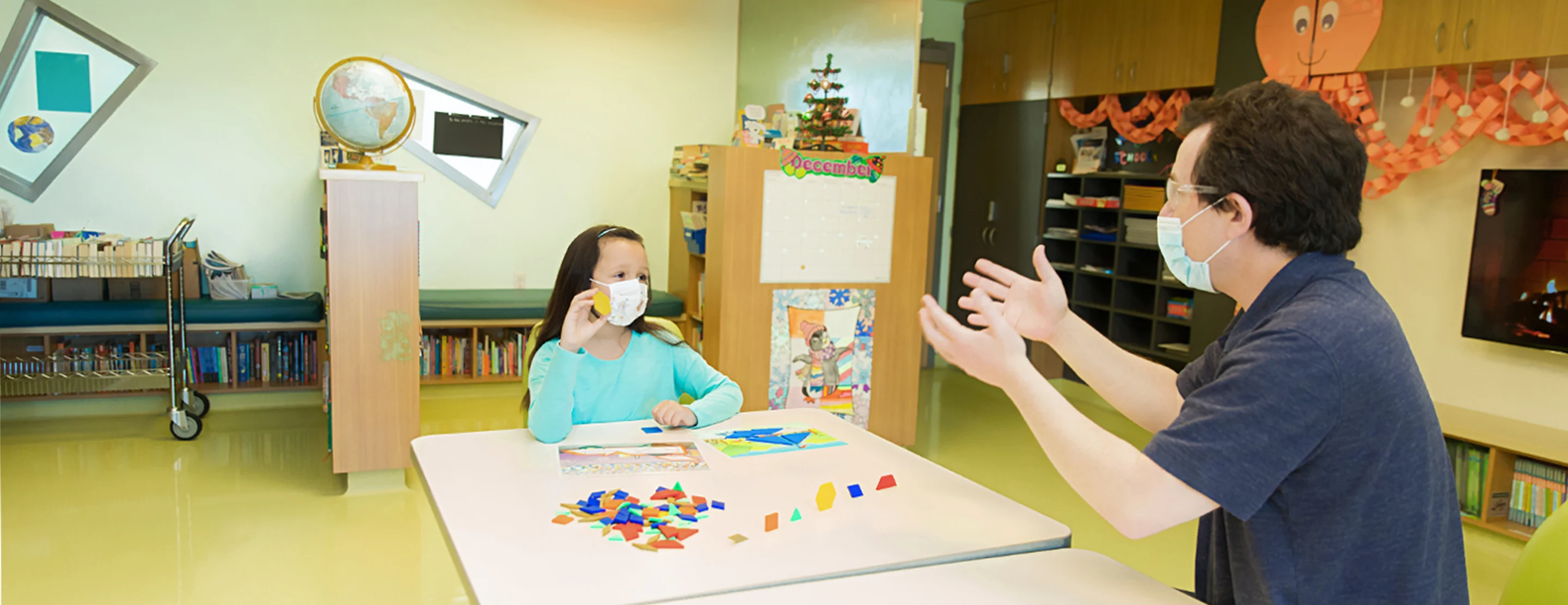
School Program for Hospitalized Children
Our schoolroom services and individual learning programs help children hospitalized at UCSF continue their education and get ready to return to school.
Social Services at UCSF Benioff Children's Hospitals
Social workers ease the effect of illness, injury and hospitalization on your family with counseling and assistance to help you navigate the challenges.
Spiritual Care at UCSF Benioff Children's Hospitals
Chaplains help UCSF patients, families and staff cope with the spiritual and emotional challenges of childhood illness. Learn more.