Desmoid Tumors in Children
On this page
Overview
Desmoid tumor is a rare type of cancer that develops in the tissues that form tendons and ligaments, usually in the arms, legs or abdomen and sometimes in the chest. These tumors, also called aggressive fibromatosis, are considered benign because they typically don't spread to other parts of the body. They may invade nearby tissues and organs, however, and can be difficult to control.
Although the cause of these tumors is not known, researchers have found that they tend to occur in children who have a family history of polyposis coli, a hereditary colon cancer. Treatment options include surgery, chemotherapy and radiation, depending on the location of the tumor and your child's age.
Signs & symptoms
A Desmoid tumor may exist for some time before being discovered. That's because they develop in flexible tissue such as tendons and ligaments, which are pushed aside to make room as the tumors grow. Symptoms vary with each child, but common symptoms include:
- Painless swelling or lump
- Obstruction of the bowels, when tumors form in the abdomen
- Pain or soreness caused by compressed nerves or muscles
- Limping when the tumors occur in the legs
Desmoid tumors vary greatly depending on size and location of the tumor, the extent to which it has invaded surrounding tissues and your child's age.
Diagnosis
The most conclusive diagnostic procedure for Desmoid tumor is a biopsy, a tissue sample from the tumor taken through a simple surgical procedure. Magnetic resonance imaging (MRI), computed tomography (CT) scans and X-rays are also used in the diagnosis, and may be performed after your child has had a complete medical examination.
Treatment
Treatment options include surgery, radiation, chemotherapy and hormone therapy.
Surgery
Surgery to remove the tumor is the primary treatment for a Desmoid tumor. Because these tumors rarely spread or metastasize, surgery alone often is the only necessary treatment. However, Desmoid tumors have a high recurrence rate, meaning they return after treatment, if they aren't completely removed. Frequently, more than one surgery is needed.
Radiation therapy
Radiation therapy uses high-energy radiation from X-rays or other sources to kill cells and shrink tumors. Radiation may be used alone or in conjunction with surgery.
Chemotherapy
Chemotherapy is the use of drugs – taken orally or injected into a vein or muscle – to kill cancer cells. Researchers are testing some types of chemotherapy to shrink desmoid tumors that are located too close to blood vessels or other organs, making surgery difficult. Chemotherapy is called a systemic treatment because the drug enters your child's bloodstream and can kill cancer cells as it travels throughout the body.
Hormone therapy
Anti-hormonal medications are sometimes used as a form of treatment because some hormones seem to increase the growth of Desmoid tumors.
Anti-inflammatory medication
Anti-inflammatory medication may be given to your child to help manage pain and swelling.
UCSF Benioff Children's Hospitals medical specialists have reviewed this information. It is for educational purposes only and is not intended to replace the advice of your child's doctor or other health care provider. We encourage you to discuss any questions or concerns you may have with your child's provider.
Contact us
Awards & achievements


Best in Northern California and top 10 in the nation for cancer care

Ranked among the nation's best in 11 specialties

Clinical trials
Tegavivint for the Treatment of Recurrent or Refractory Solid Tumors, Including Lymphomas and Desmoid TumorsOpens in a new window
This phase I/II trial evaluates the highest safe dose, side effects, and possible benefits of tegavivint in treating patients with solid tumors that has come back (recurrent) or does not respond to treatment (refractory)...Project: Every Child for Younger Patients With CancerOpens in a new window
This study gathers health information for the Project: Every Child for younger patients with cancer. Gathering health information over time from younger patients with cancer may help doctors find better methods of treatment and on-going care.
Related conditions & treatments
Treatments
Helpful resources
Support services

Camp Okizu
This overnight summer camp for children with cancer, siblings and families offers fun activities, education sessions and support in a beautiful setting.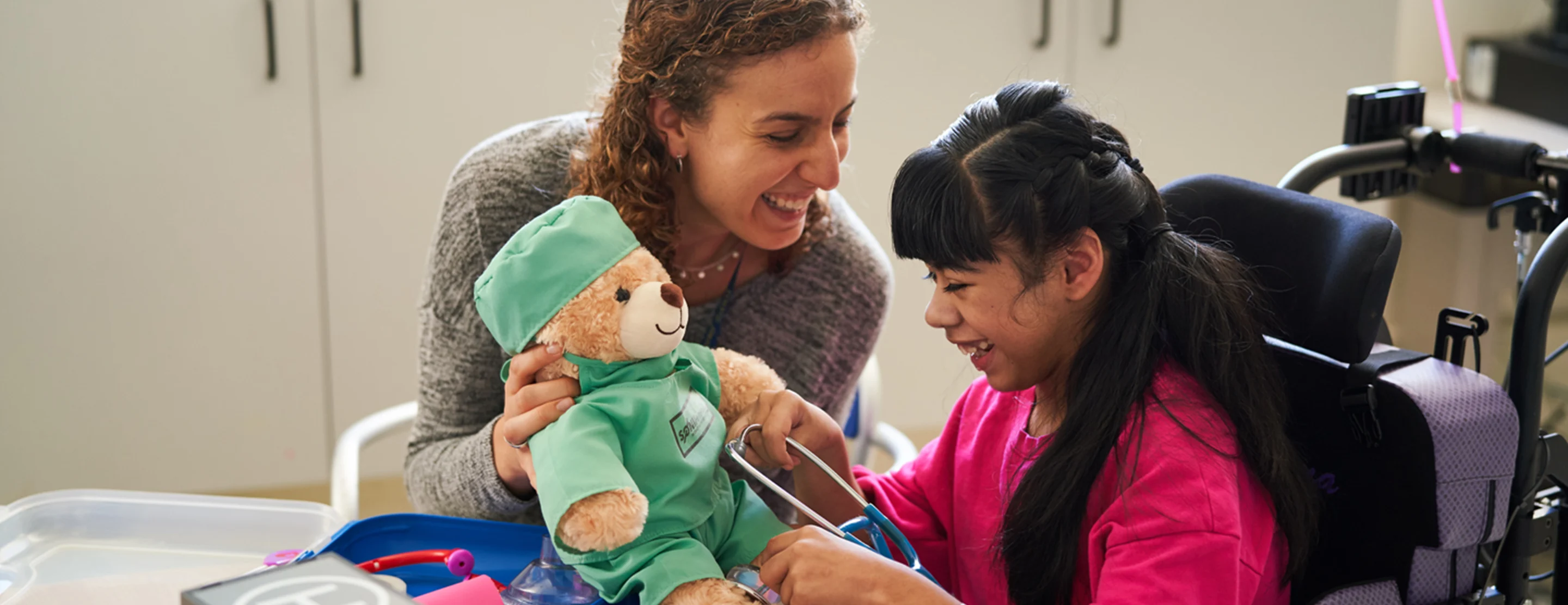
Child Life
Certified child life specialists ease the stress and anxiety of childhood illness through therapeutic play, schooling and family-focused support.
Family Amenities
Family-friendly amenities help you relax and take care of yourself while staying close to your child. We offer lounges, kitchens, showers, breastfeeding rooms and more.
Glogau Teddy Bear Rescue Fund
Families that need additional assistance during their child's hospital stay have access to toys, hotel vouchers and other amenities. Find out more.
Interpreter Services & Communication Assistance at UCSF Benioff Children's Hospitals
Interpreter services in many languages and TDDs are available for families that need help communicating with care teams. Here's how to access them.
Social Services at UCSF Benioff Children's Hospitals
Social workers ease the effect of illness, injury and hospitalization on your family with counseling and assistance to help you navigate the challenges.