
Trauma Team Saves a Teen Surfer from Paralysis
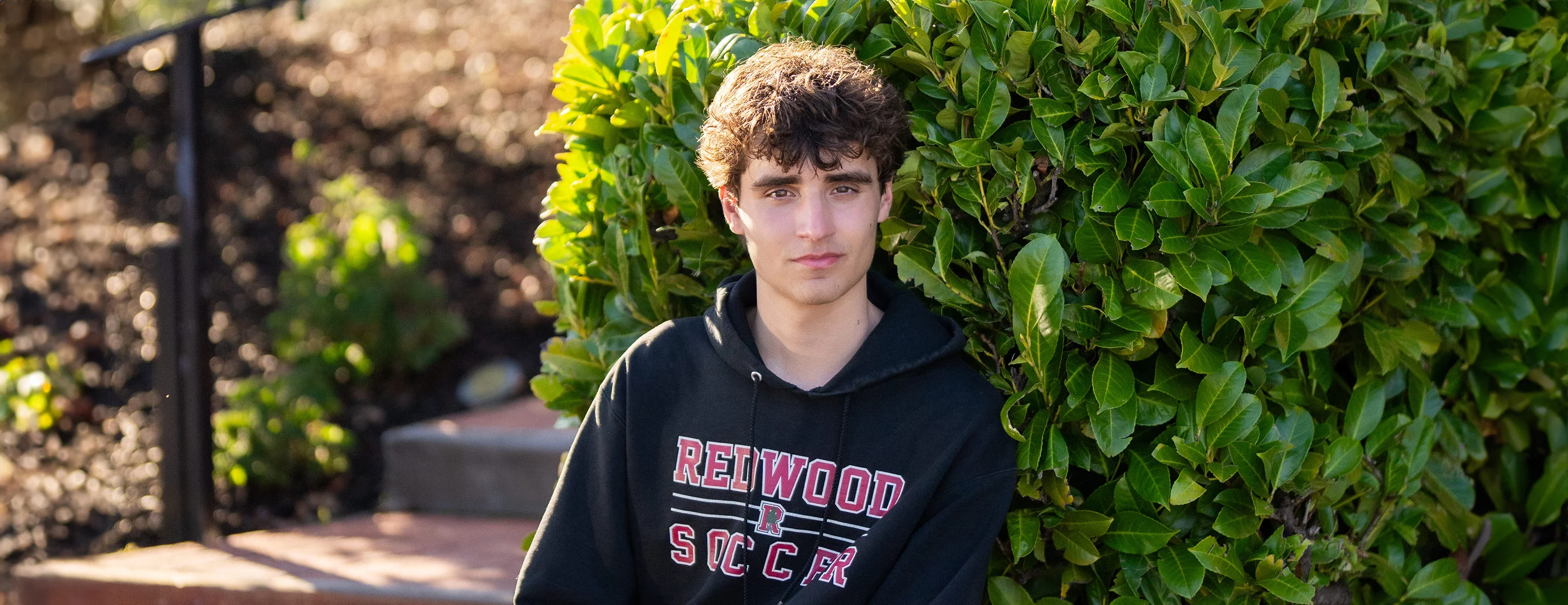
Marcos Ornellas was a water baby. He swam in pools and the ocean, competed with friends to see who could hold their breath underwater the longest. As a teenager, he loved few things more than the beach, surfboards and catching the perfect wave.
One overcast day in June 2023, the 15-year-old and his friends took their boards to Bolinas Beach, about an hour north of San Francisco. The waves were small, but they decided to make the most of the summer weather.
Out in the ocean, Marcos turned his board into the waves and paddled. A second later, he was up on his feet with the breeze in his face – his happy place. But as the shore quickly approached, he saw a group of about 20 young children taking surfing lessons right in his path. To avoid a collision, he dove into the murky water. The next thing he knew, his head slammed into a sandbar. His neck got warm. Then no feeling – no pain, nothing.
When he surfaced, he was floating face down in the water. He tried to right himself but found he couldn't move. "I was super confused," Marcos said. "I told myself: 'Just stay calm, stay relaxed, hold my breath, and my buddies will get me.'"
From beneath the surface, Marcos could hear his friends talking and laughing. "They thought I was messing around."
Almost a minute later, his friend Ryan realized something was wrong. "Ryan flipped me over, and I remember him asking, 'Marcos, what are you doing?'"
Gasping for air, Marcos responded, "I can't move."
Immediately, his buddies lifted him onto his surfboard and paddled him to the beach, where they called for help.
Our level I pediatric trauma center is at the ready 24/7/365 to provide comprehensive injury care for the most severely injured children.
Here for a family's worst day
Back home, Marcos' mother, Elena Vives, picked up the phone.
"When I heard Ryan's voice on Marcos' phone, I knew something bad had happened," Vives said. "But when I heard he was being airlifted to a hospital, I knew it was really bad."
Marcos was taken by emergency helicopter to UCSF Benioff Children's Hospital Oakland, the nearest pediatric level I trauma center with a helipad. The hospital is one of only three trauma centers in Northern California verified for providing complete care for every aspect of injury – and it's the only one that focuses solely on children, treating more than 1,200 pediatric patients with traumatic injuries each year.
About 30 minutes later, Dr. Christopher Newton and a 15-member trauma team – doctors, nurses, radiology technicians, and neurological and orthopedic specialists – were working to stabilize Marcos.
"He was calm and interactive, and obviously scared," said Newton, chair of the surgery department at BCH Oakland.
When young people die from severe trauma, it's generally in the initial hours after injury, according to Dr. Aaron Jensen, the hospital's trauma medical director. "So timely care for life-threatening bleeding, brain injury or spine injury is essential to prevent death and minimize disability from their injury," he said. "Our level I pediatric trauma center is at the ready 24/7/365 to provide comprehensive injury care for the most severely injured children, cases like Marcos'. We are here for the community and for the region – for a family's worst day."
In those first hours, it was essential for the Oakland trauma team to stabilize Marcos' blood pressure and other vital signs before they could perform spine surgery the following day. Marcos had shattered his fifth cervical vertebra, about halfway down his neck, and the impact had pushed the fourth vertebra into his spinal cord, causing paralysis.
The trauma team had found a glimmer of hope, though: Marcos had some feeling in his upper arms and right thigh, indicating that his spine was not severed irreversibly. There was a possibility he might regain function below his neck. But how much, if any, was unknown.
Fear of permanent damage
Meanwhile, neurosurgeon Dr. Peter Sun was alerted to Marcos' case as soon as he was admitted and, with the team of trauma surgeons, began charting the safest approach for surgery the following morning.
Because Oakland is a level I trauma center, Sun had immediate access to all X-ray, CT and MRI imaging, an entire trauma team, and surgeons in every specialty area. "We knew what needed to be done and all the necessary equipment and people would be ready. We just assembled the team and scheduled the surgery."
With several hundred spine surgeries over more than two decades at BCH Oakland under his belt, Sun confidently charted an approach for Marcos' surgery in which his spine would be accessed from the front rather than the back.
"Marcos' injuries were closest to the front of his neck, and there was room to maneuver around his major arteries and esophagus," Sun said. "Marcos was a young athlete in great physical condition. I wanted to give him the best possible chance to regain mobility and resume his life in sports by avoiding his large upper posterior neck and back muscles – which can result in a long and difficult healing process."
A long, quiet ride
After the call from Ryan, Vives and Marcos' father, Chris Ornellas, drove 45 minutes from their home in Sausalito, California, across the San Francisco Bay to Oakland – mostly in silence. They promised each other that they wouldn’t jump to conclusions until they heard from the medical team. They also made a pact not to cry in front of Marcos – a promise they sometimes found difficult to keep.
Seeing their son with large plastic braces wrapped around his torso and neck, an oxygen mask and a tangle of IV tubing, surrounded by beeping monitoring equipment, was jarring, Vives said. But he was awake when they arrived, and she remembered Marcos choking up when he asked his parents, "This is going to change my life, right?" His mother whispered, "We'll see."
"We were panicking and trying to catch our breath to figure out what was going on," Ornellas said. "But the doctors patiently explained everything, showed us the MRIs, explained that the issue was Marcos' fourth and fifth cervical vertebrae, explained the implications of a spinal cord injury, and walked [us] through the surgical procedure. They were amazing. We immediately placed all our trust in them."
Marcos' six-hour surgery was successful. Sun placed a titanium cage around Marcos' shattered fifth vertebra to support his neck and spine and to encourage bone regeneration around the damaged area. He picked out the fragments of crushed bone and drilled off the protrusion impeding Marcos' spinal cord.
Glimmers of hope
In the days after his surgery, Marcos lay in his hospital bed with spinning thoughts: What would life be like now? Why him? It wasn't fair. Those thoughts lasted about two days, his father said, "and we've never heard them from him again."
Marcos said he grabbed onto the glimmer of hope his surgeon shared with him and fueled it with his own grit and determination.
"When he said I had a chance, when he told me my spinal injury was incomplete, that just changed everything in my mind," Marcos said. "I had a chance and decided, 'I'm going to do everything in my power to get better.'"
Marcos was admitted to UCSF Benioff Oakland for 10 days, but minuscule signs of progress began appearing in the first few days.
"When I first got to rehab, I just sat in the wheelchair and wasn't able to move anything at all. A physical therapist had to lift my arm for me to stretch it to keep my range of movement,” Marcos said. "I was asking myself if PT was really going to help me and is what I'm doing going to change anything at all?
"But the reality was, yes, it made a huge difference, and it was really important for me to keep my mind focused. I just needed to keep pushing and had to stay positive."
The first sign of success was a slight movement in Marcos' right thigh almost a week after the accident. His father asked whether it was involuntary, but Marcos said he was visualizing the movement and trying to make his body respond. He continued to push himself, aided by loud, motivating music played by his physical therapist, Anthony Ong, during grueling exercise sessions.
"I decided to make the best of it and try to have fun," Marcos said. "When the people around you are positive, it makes you positive... and it just made me want to fight more."
Encouraged by his steady progress, Marcos asked his dad to document his physical therapy sessions on video. He played them back often, reminding himself of his daily accomplishments.
"Filming Marcos was very emotional but also filled with joy at seeing him able to sit up, stand and, later, take his first steps," Ornellas said. "The videos were a great motivator, and if he felt he was hitting a plateau, we could remind him of how far he had progressed from a week or month before."
His family never left his side and cheered each flicker of movement.
1 of 4
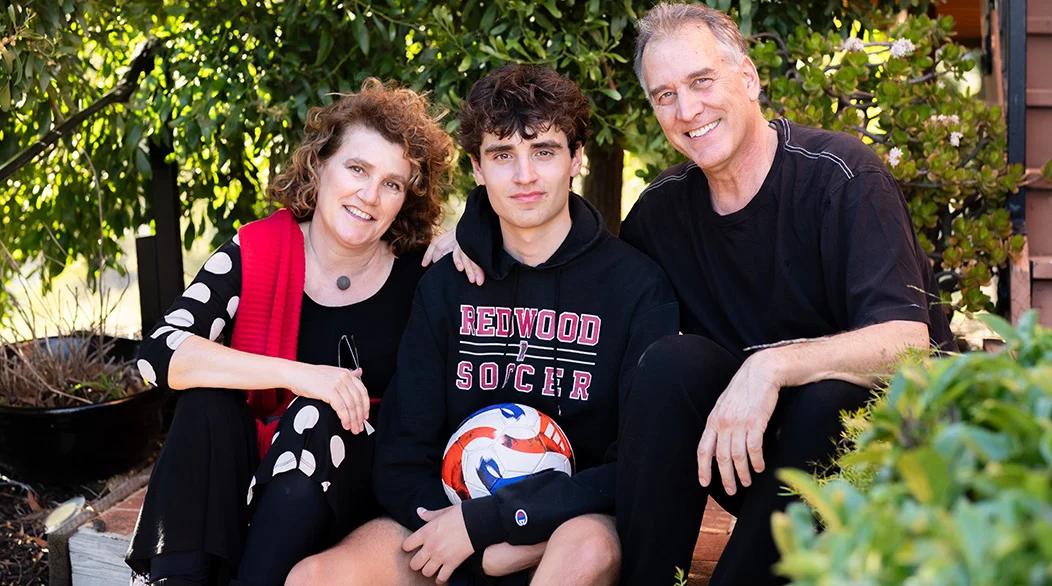
Marcos Ornellas' parents, Elena Vives and Chris Ornellas, have supported their son through spine surgery and rehab after a surfing accident.
Back on the field
Nine months and hundreds of hours of physical therapy later, Marcos returned to the Redwood High School soccer field, but this time as a spectator supporting his former teammates. He wasn't medically cleared to participate in contact sports, but standing on the sidelines during matches was his way of staying connected with his friends and a sport he loves. Sometimes, during halftime, Marcos and another team member, who was also injured, practiced lightly kicking the soccer ball on the field. As the soccer season drew to a close, Marcos continued to grow stronger. He and his father now kick the ball and practice drills to build his strength and agility at a nearby park almost daily.
The onetime water baby hasn't returned to surfing but is already back on the beach with friends – just not Bolinas Beach, at least not yet.
"When they tell you it's going to take time, it's true," Marcos said. "You can't expect things to just come back – they might, but you have to work at it. And the mental battle is the hardest because you really don't know where you're going to end up."
While Marcos has made great strides in regaining muscle strength and mobility, there are subtle physical reminders of his trauma. For example, he has trouble differentiating between hot and cold, a condition he hopes will improve with time. Though he's still in rehab, his sessions have dropped from daily to several times a week, with a commitment to work out in the family's home gym, built to support his recovery. The former high school star player who aimed for a college soccer scholarship has started to contemplate plan B.
"My priorities have changed now," Marcos said. "Family, friends and my college education are what is important to me now. I know I was really lucky. This could have turned out very differently, and I'm so grateful to be where I am now."
Video produced by Maurice Ramirez
Providers

Peter P. Sun, MD
Neurosurgery • Pediatric Neurosurgery
Aaron Jensen, MD, M ED
Pediatric Surgery
Christopher Newton, MD
Pediatric Surgery
Oakland's pediatric level I trauma care
Our center includes:
- A trauma surgeon and an anesthesiologist on site 24/7 every day of the year, as well as an immediately available operating room
- A blood bank on site with resources to support massive transfusions for patients with life-threatening bleeding
- On-call surgical specialists available within 30 minutes to perform emergency surgery
- Advanced radiology services 24 hours a day
- An on-site helipad for rapid emergency transportation
- A comprehensive pediatric trauma intensive care unit to meet the unique needs of the most seriously injured children
- An inpatient rehab unit

Related conditions & treatments
Conditions
- Cervical Spine Fracture
- Cervical Spine Injury
- Spinal Cord Injury
Treatments
- Cervical Spine Surgery
- Physical Therapy
- Spinal Cord Injury Rehabilitation