Family Information & Navigation Desk (FIND) Program
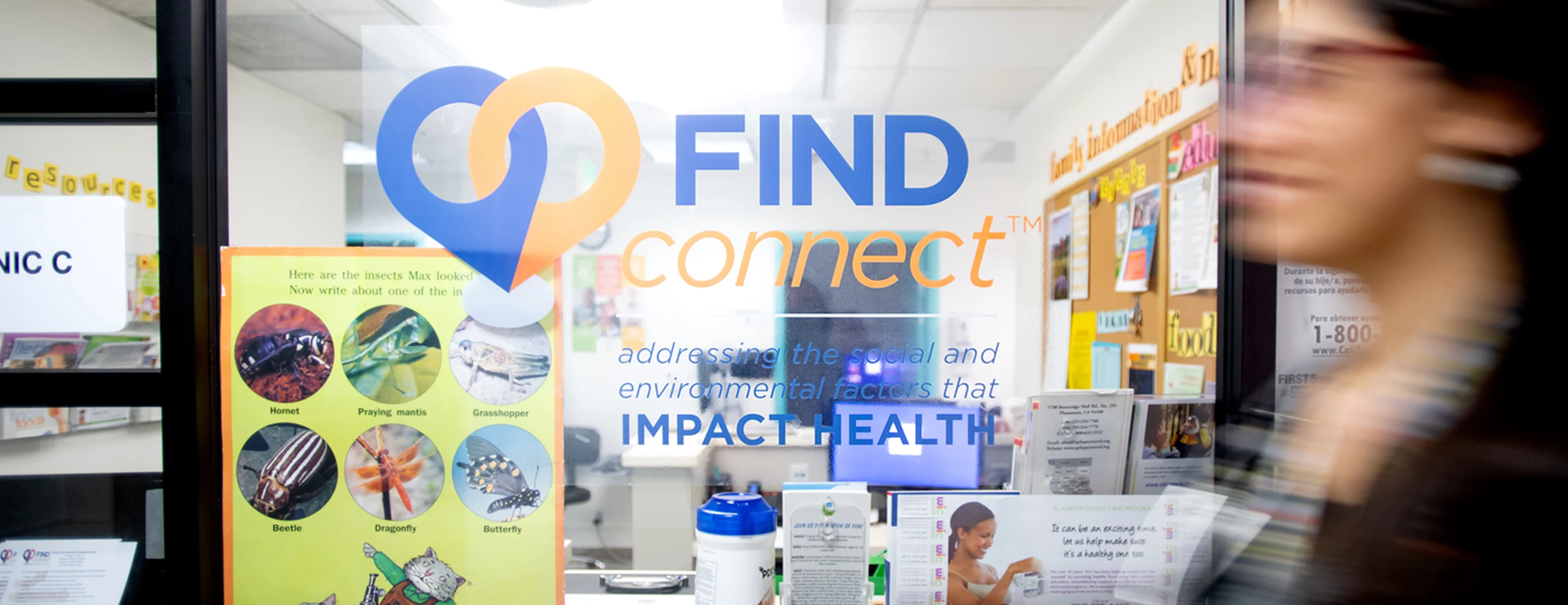
Our communities – where we live, learn, work and play – can have an even greater effect than our medical care on how long and how well we live. This reality informs the Family Information & Navigation Desk (FIND) Program at UCSF Benioff Children's Hospital Oakland, which was born from our medical staff's desire to move beyond a focus on biological and behavioral explanations of illness. FIND strives to understand the root causes of health inequities and take a preventive approach to protecting the health of a population.
About the Family Information & Navigation Desk (FIND) Program
Research shows that social factors, such as food insecurity and housing instability, can significantly affect someone's physical and mental health. The staff of UCSF Benioff Children's Hospital Oakland launched FIND to help minimize the social and environmental factors that impair the health of our patients and their families.
FIND's goal is to screen for social issues affecting our patients' health, including tobacco use. We also screen for access to basic needs – such as nutritious food, housing and utilities – and connect families to community resources when necessary. In addition, FIND trains college students, community members and professionals in the social determinants of health (SDoH) approach to medical care.
Contact us
FIND Program
FIND is a member of the Bay Area Regional Help Desk Consortium, which aims to support the development and sustainability of resources like FIND across the wider Bay Area. The consortium cites a national survey showing that four in five physicians say unmet social needs lead directly to poorer health and that most doctors are not confident about their capacity to address those needs.
Mission
FIND's mission is to improve outcomes for patients by addressing the root causes of health inequities. Our techniques include:
- Partnering with families to identify unmet social needs
- Partnering with providers to treat the underlying social causes of medical problems
- Partnering with community-based organizations to expand their services within the medical home
- Partnering with academic institutions to train the next generation of health care professionals in a SDoH approach
- Partnering with policymakers to provide evidence useful in advocacy
Vision
FIND aims to reduce health inequities by partnering with families to address harmful social factors, including food insecurity, housing instability, secondhand smoke exposure, lack of access to green space and lack of physical activity.
Community partners
- RAMP (Regional Asthma Management and Prevention)
This program seeks to reduce asthma in the community through a broad and comprehensive strategy that includes patient management and environmental protection. RAMP brings together diverse partners – such as public health and community-based organizations, schools, medical providers, and environmental health and justice groups – to join forces and reduce the burden of asthma, with a focus on communities especially affected by the disease. - BARHC (Bay Area Regional Help Desk Consortium)
This alliance is made up of doctors, social workers, lawyers and officials affiliated with government agencies or academic institutions. BARHC coordinates resources and efforts from three hospitals in the Bay Area: Zuckerberg San Francisco General Hospital and Trauma Center, Highland Hospital and UCSF Benioff Children's Hospital Oakland. Each site refers low-income patients to the most effective public resources in the area, using a help desk model to screen individual needs, identify the core problem and refer to appropriate institutions. - Alameda County Community Food Bank
- East Bay Community Law Center
- East Bay Regional Park District
- Mills College
FIND also collaborates with many community organizations, including:
- Bananas – Child care referrals and resources
- CoachArt - Arts and athletics for children impacted by chronic illness
- Family Resource Navigators
- YMCA
These collaborations serve as the backbone of the program's ongoing efforts to link children and families to services they need.